Table of Contents
ToggleThe Forsworn are some of Skyrim’s most visually distinctive enemies, lurking in the mountainous reaches of The Reach with their tribal aesthetic and fierce territorial nature. Their armor is equally unique, a ragged, primitive light armor set that screams “wilderness survivalist” while offering surprisingly solid protection for early-to-mid game adventurers. But here’s the thing: most players never give Forsworn armor a second glance. They strip it off dead enemies, sell it for pocket change, and move on to glass or dragonscale without realizing what they’re missing.
Forsworn armor isn’t just cosmetically interesting. It’s lightweight, upgradeable, and serves as a fantastic option for stealth archers, light armor enthusiasts, or anyone roleplaying a character with roots in Skyrim’s wilder factions. Whether players are farming it for profit, using it as a stepping stone to better gear, or committing to a full Forsworn-themed playthrough, understanding where to find it, how it stacks up, and how to squeeze every ounce of value from it matters. This guide covers everything from spawn locations and stats to smithing upgrades and build synergy, so players can decide if this tribal armor set deserves a spot in their inventory.
Key Takeaways
- Skyrim Forsworn armor is a lightweight, upgradeable mid-tier light armor set that outperforms basic hide and leather armor while remaining accessible from level 1.
- Forsworn armor can be farmed efficiently from Forsworn camps across The Reach, with Red Eagle Redoubt and Hag’s End offering the highest enemy concentrations and respawning every 10–30 in-game days.
- Upgrading Forsworn armor requires only common materials (leather and leather strips), making it significantly cheaper and easier to improve than high-tier alternatives like glass or dragonscale.
- Stealth archers and light armor builds gain maximum value from Forsworn armor when enchanted with Fortify Archery, Muffle, and Fortify Sneak, creating a thematic and effective combat setup.
- Reaching the armor rating cap (567 displayed armor) using Forsworn armor with maxed Smithing, enchantments, and perks makes it defensively equivalent to endgame heavy armor sets.
- Forsworn armor excels in roleplay scenarios, allowing players to immerse themselves in the tribal outsider aesthetic while maintaining aesthetic cohesion with Forsworn weapons and faction-aligned character choices.
What Is Forsworn Armor and Why Does It Matter?
Forsworn armor is a light armor set worn by the Forsworn faction, a group of Bretons who’ve rejected traditional society and adopted a shamanistic, tribal lifestyle in The Reach. Visually, it’s unmistakable: bone decorations, fur trim, and weathered leather straps that look like they were cobbled together from scavenged materials. It’s not the most glamorous armor in Skyrim, but it has a certain rugged charm that appeals to players who want something different from the polished steel or elven aesthetics.
From a gameplay perspective, Forsworn armor sits in an interesting middle ground. It’s not top-tier by any stretch, but it outperforms basic hide and leather armor while being readily available from level 1. Players looking to supplement their light armor skill early on or who need a stopgap before committing to elven or glass sets will find Forsworn gear surprisingly useful. Plus, it’s abundant, The Reach is crawling with Forsworn, making it easy to farm multiple pieces for upgrades or enchanting experiments.
Forsworn Armor Stats and Base Attributes
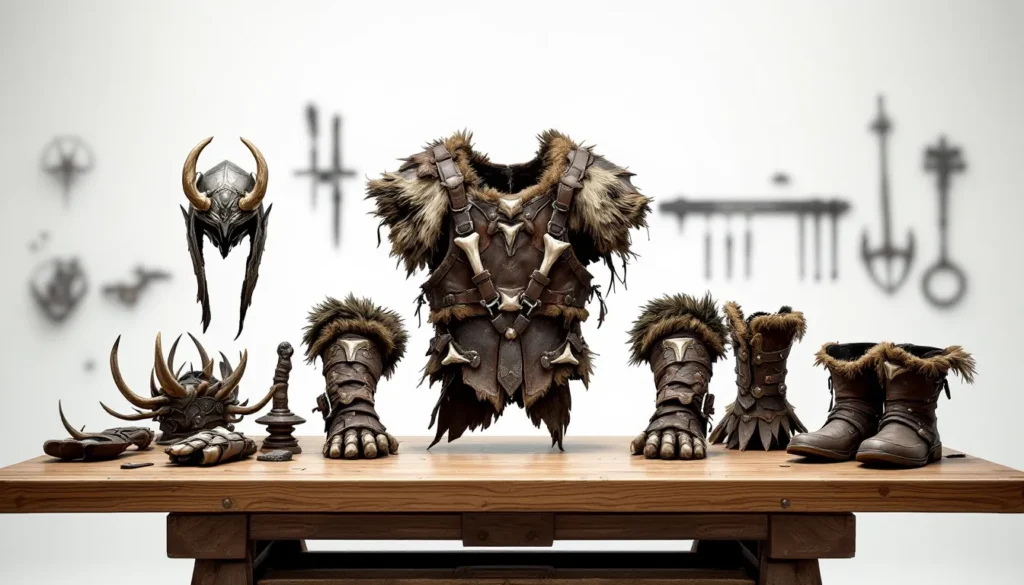
Forsworn armor has four main pieces: helmet, armor (chest piece), boots, and gauntlets. There’s also the Forsworn Headdress, a rare alternative to the helmet that shares the same stats but has a slightly different appearance.
Here’s the base armor rating breakdown (unupgraded):
- Forsworn Helmet: 12 armor
- Forsworn Armor (chest): 33 armor
- Forsworn Boots: 8 armor
- Forsworn Gauntlets: 8 armor
- Total set bonus: 61 armor (unupgraded)
These numbers place Forsworn armor firmly in the mid-tier light armor category. It’s heavier than hide or leather but lighter than elven. The set has a base weight of 12.5 pounds total, making it reasonably light for stamina-conscious builds. None of the pieces come with built-in enchantments, so players have a blank slate for customization.
One quirk worth noting: Forsworn armor doesn’t benefit from any specific smithing perks initially. Players need the Arcane Blacksmith perk (Smithing level 60) to improve enchanted pieces, but unenchanted Forsworn gear can be upgraded at any workbench with basic materials.
How Forsworn Armor Compares to Other Light Armor Sets
Forsworn armor occupies an awkward spot in Skyrim’s progression curve. It’s better than the starter sets (hide, leather) but falls short of the high-tier options (glass, dragonscale). Here’s how it stacks up against common alternatives:
vs. Hide Armor: Forsworn wins handily. Hide armor maxes out at 40 total armor rating (full set), while Forsworn pushes 61. If players are choosing between the two, Forsworn is the clear winner.
vs. Leather Armor: Leather offers 46 armor total (unupgraded). Forsworn beats it by 15 points, which translates to noticeably better damage mitigation in early combat.
vs. Elven Armor: Elven armor hits 79 armor total and benefits from the Elven Smithing perk for easier upgrades. It’s objectively better, but it also requires Smithing 30 to craft and is less common in the wild. Forsworn gear is easier to farm and doesn’t require perk investment to find.
vs. Glass Armor: Glass armor (104 total armor) and dragonscale (111 total armor) blow Forsworn out of the water. But these are endgame sets that require Smithing 70+ and rare materials. Forsworn is never competing in that weight class.
The real comparison is with Scaled Armor (another mid-tier option). Scaled armor offers 68 total armor, slightly edging out Forsworn, but it’s heavier (total weight of 21 pounds). For stealth builds or players who prioritize mobility, Forsworn’s lighter weight is a meaningful advantage.
Bottom line: Forsworn armor is a solid choice for levels 10-30, especially for light armor builds that haven’t invested in smithing perks yet. It’s not the best, but it’s readily available, lightweight, and does the job until better options appear.
Where to Find Forsworn Armor in Skyrim
Forsworn armor is exclusively worn by Forsworn enemies, meaning players need to hunt down and kill members of this faction to collect the set. The good news? Forsworn are everywhere in The Reach, and they’re hostile on sight. The bad news? Individual pieces are randomized drops, so farming a complete set can take a few encounters.
Best Forsworn Camp Locations for Farming Armor Pieces
The Reach is littered with Forsworn camps, but some locations are better than others for efficient farming. Here are the top spots:
Red Eagle Redoubt: One of the most densely populated Forsworn camps in the game. Located northwest of Markarth, this multi-tiered stronghold is crawling with Forsworn warriors, archers, and shamans. Players can expect to find at least 8-10 Forsworn here, making it a prime farming spot. The camp also ties into the “The Legend of Red Eagle” quest, so players can knock out two objectives at once.
Serpent’s Bluff Redoubt: Situated west of Rorikstead, this camp features a similar setup to Red Eagle Redoubt but with slightly fewer enemies. Still, it’s a reliable spot for collecting armor pieces and has the added bonus of a Forsworn Briarheart, a rare variant that sometimes drops unique loot.
Broken Tower Redoubt: East of Markarth, this location is another Forsworn stronghold with multiple levels and a high enemy count. It’s a bit more dangerous due to tight corridors and ambush points, but the loot potential is solid.
Hag’s End: This dungeon is part of the “The Forsworn Conspiracy” and “No One Escapes Cidhna Mine” quest chain. It’s packed with Forsworn and features a hagraven boss. Players pursuing these quests will naturally collect a full set of Forsworn armor by the time they finish.
Lost Valley Redoubt: Added in the Anniversary Edition (via the “Bittercup” Creation Club content), this location is densely packed with Forsworn and is one of the best farming spots if players have access to it.
Most Forsworn camps respawn after 10 in-game days (or 30 days if the player has cleared the location), so players can revisit these spots for repeat farming.
The Reach: Your Primary Hunting Ground
The Reach is the westernmost hold in Skyrim, characterized by rocky mountains, ancient ruins, and a general atmosphere of danger. It’s also Forsworn territory. Players will encounter Forsworn patrols, ambushes, and camps throughout the region, making it impossible to avoid them if traveling through the area.
Key settlements like Markarth serve as central hubs for quests that involve the Forsworn. The city’s political intrigue and the “Forsworn Conspiracy” questline provide narrative context for why these tribal warriors are so hostile, but from a loot perspective, the wilderness is where players should focus.
Forsworn camps are typically marked by bone chimes, wooden totems, and animal skulls. They’re easy to spot from a distance, and many are positioned near important landmarks or quest locations. Players who explore The Reach thoroughly will stumble across more Forsworn gear than they know what to do with.
Quest-Related Opportunities to Obtain Forsworn Gear
Several quests naturally lead players into Forsworn territory, guaranteeing armor drops:
“The Forsworn Conspiracy” and “No One Escapes Cidhna Mine”: This two-part questline in Markarth forces players to confront the Forsworn directly. By the end of “No One Escapes Cidhna Mine,” players will have looted multiple Forsworn corpses and likely collected a full set of armor.
“The Legend of Red Eagle”: This miscellaneous quest involves retrieving Red Eagle’s sword from Red Eagle Redoubt. The camp is stuffed with Forsworn, making it a guaranteed farming opportunity.
Bounty Quests: Jarls and stewards in The Reach frequently offer bounty quests to clear out Forsworn camps. These are repeatable and provide a steady stream of Forsworn encounters.
Players who prefer a more organic approach to gear collection can simply wander The Reach and take on Forsworn as they appear. Random encounters and unmarked camps ensure that Forsworn armor is never in short supply.
Complete Forsworn Armor Set: All Pieces Explained
The Forsworn armor set consists of five pieces, though players only need four to complete a functional set. Each piece has a distinct appearance that reinforces the tribal, scavenged aesthetic of the Forsworn faction.
Forsworn Helmet, Armor, Boots, and Gauntlets
Forsworn Helmet: The standard helmet features a bone faceplate with antler-like protrusions and leather straps. It’s one of the more visually striking helmets in the light armor category, though it does obscure the player character’s face significantly. Base armor rating is 12, and it weighs 2 pounds.
Forsworn Armor (chest piece): The chest armor is a mix of fur, leather, and bone accents. It’s bulkier than most light armor chest pieces but still maintains the ragged, improvised look. The base armor rating is 33, and it weighs 6 pounds. This is the most important piece of the set from a defensive standpoint, as chest armor always provides the highest armor value.
Forsworn Boots: Simple leather boots with fur trim and minimal bone decoration. They provide 8 armor and weigh 2 pounds. Nothing flashy, but they complete the set aesthetically.
Forsworn Gauntlets: Similar to the boots, leather and fur construction with a rough, handmade appearance. They offer 8 armor and weigh 2.5 pounds. The gauntlets are functional but unremarkable compared to the helmet or chest piece.
All four pieces can be upgraded at a workbench using leather and leather strips, which are among the most common crafting materials in the game. This makes Forsworn armor exceptionally easy to improve, even for players who haven’t invested heavily in smithing.
Forsworn Headdress: The Rare Alternative
The Forsworn Headdress is a cosmetic variant of the Forsworn Helmet. It shares the same base armor rating (12) and weight (2 pounds) but has a slightly different design. Instead of the bone faceplate, the headdress features more prominent antlers and a more open face design, allowing players to see their character’s face more clearly.
The headdress is significantly rarer than the standard helmet. It’s primarily worn by Forsworn Briarhearts, elite Forsworn enemies who have undergone a ritual to replace their hearts with briars, granting them enhanced combat abilities. Briarhearts are mini-bosses within Forsworn camps, so players need to specifically target them to farm the headdress.
From a stats perspective, the headdress is identical to the helmet, so the choice is purely cosmetic. Players who prefer the more open, antler-heavy design will want to farm Briarhearts, while those satisfied with the standard helmet can ignore the headdress entirely.
One fun detail: the Forsworn Headdress is lightweight enough that it pairs well with enchanted builds, where every pound of weight savings matters for min-maxers optimizing carry capacity.
How to Upgrade and Improve Forsworn Armor
Forsworn armor’s upgrade path is straightforward, but there are a few nuances worth understanding to maximize its effectiveness.
Smithing Requirements and Materials Needed
Forsworn armor can be improved at any workbench using leather and leather strips. These materials are dirt cheap and readily available from general goods merchants, hunters, or by crafting them from animal pelts. This is one of Forsworn armor’s biggest advantages, players don’t need rare ingredients like refined malachite or moonstone to upgrade it.
Here’s the material cost per piece:
- Forsworn Helmet: 1 leather, 1 leather strip
- Forsworn Armor (chest): 3 leather, 2 leather strips
- Forsworn Boots: 1 leather, 1 leather strip
- Forsworn Gauntlets: 1 leather, 1 leather strip
- Forsworn Headdress: 1 leather, 1 leather strip
Upgrading the full set requires 7 leather and 6 leather strips, which costs around 100-150 gold from merchants or can be crafted from animal hides at a tanning rack.
Forsworn armor doesn’t benefit from any specific smithing perks (like Elven Smithing or Glass Smithing), so players won’t get the double improvement bonus from perks. But, higher Smithing skill levels still improve the upgrade effectiveness, and investing in the Arcane Blacksmith perk (Smithing 60) allows players to improve enchanted Forsworn armor.
With a Smithing skill of 100 and the right perks, Forsworn armor can be upgraded to Legendary quality, pushing the total set armor rating well above 100. This makes it competitive with mid-tier heavy armor sets, which is impressive for gear that’s essentially free to farm.
Enchanting Forsworn Armor for Maximum Effectiveness
Forsworn armor comes unenchanted, which is both a curse and a blessing. The curse? No free bonuses. The blessing? Complete customization freedom. Players can enchant Forsworn armor to suit any build, from stealth-focused assassins to magic-wielding spellswords.
Here are some top enchantment choices for each piece:
Helmet: Fortify Archery is the gold standard for stealth archers, boosting bow damage by up to 40% with a grand soul gem. Alternatively, Fortify Magicka or Fortify Alchemy work for mage or alchemist builds.
Chest Armor: Fortify Health is a safe, versatile choice, adding up to 50 HP. For sneakier builds, Fortify Sneak reduces detection radius. Fortify Light Armor boosts the armor rating further, stacking with smithing improvements.
Boots: Muffle is the single best enchantment for stealth builds, reducing movement noise to zero when maxed. For non-stealth characters, Fortify Stamina or Resist Fire/Frost/Shock provide solid defensive bonuses.
Gauntlets: Fortify One-Handed or Fortify Archery are the offensive powerhouses here. Fortify Smithing is another strong option if players want to maximize their upgrade quality before switching to combat enchantments.
Players who commit to a fully enchanted, fully upgraded Forsworn set can punch well above the armor’s weight class. The combination of high armor rating (from smithing) and stacked bonuses (from enchanting) turns this tribal gear into a legitimate endgame option for light armor purists.
One overlooked detail: Forsworn armor’s low base value means disenchanting enchanted pieces costs less soul gem charge than higher-tier armor. Players experimenting with enchanting builds can use Forsworn gear as cheap test subjects before committing expensive materials to glass or dragonscale sets.
Best Character Builds and Playstyles for Forsworn Armor
Forsworn armor shines in specific builds, particularly those that prioritize mobility, stealth, and light armor perks. It’s not ideal for tank builds or players who prefer heavy armor, but for the right character concept, it’s a perfect fit.
Light Armor Stealth Builds
The stealth archer is Skyrim’s most infamous build, and Forsworn armor slots seamlessly into this playstyle. The low weight (12.5 pounds total) keeps stamina consumption minimal, and the mid-tier armor rating provides enough protection to survive if stealth breaks.
Here’s a sample stealth archer setup using Forsworn armor:
- Helmet: Enchanted with Fortify Archery
- Chest: Enchanted with Fortify Sneak
- Boots: Enchanted with Muffle
- Gauntlets: Enchanted with Fortify Archery
This setup maximizes bow damage and sneaking effectiveness while maintaining the aesthetic cohesion of a full Forsworn set. Pair it with the Ancient Shrouded Gloves (from the Dark Brotherhood) if players want to mix and match for even higher archery bonuses, though this breaks the visual theme.
Stealth dagger builds also benefit from Forsworn armor. The light weight and enchantment flexibility allow players to stack Fortify Sneak and Fortify One-Handed for devastating sneak attacks. The Lord Stone can provide additional damage resistance, compensating for the armor’s mid-tier base stats.
One underrated synergy: Forsworn armor pairs exceptionally well with the Khajiit or Wood Elf races. Khajiit get a +12 bonus to Sneak and night vision, while Wood Elves start with +10 Archery and disease resistance. Both races complement the light armor stealth playstyle perfectly.
Roleplay Opportunities: Playing as a Forsworn Character
Beyond stats, Forsworn armor unlocks unique roleplay potential. Players who want to immerse themselves in Skyrim’s lore can create a character aligned with (or sympathetic to) the Forsworn cause. This opens up narrative-driven playstyle choices that go beyond min-maxing armor ratings.
A Forsworn-aligned character might:
- Avoid Markarth and The Reach’s established cities, instead camping in the wilderness and using alchemy to survive.
- Prioritize Conjuration and Alteration magic, reflecting the shamanic, nature-focused magic of Forsworn Briarhearts.
- Use only Forsworn weapons and armor, rejecting “civilized” gear in favor of tribal equipment.
- Side with Madanach during the “No One Escapes Cidhna Mine” quest, fully committing to the Forsworn faction.
This kind of roleplay is where Forsworn armor truly shines. The visual design screams “outsider,” and wearing it while interacting with NPCs (especially in Markarth) creates a thematic dissonance that enhances immersion. It’s not the most powerful armor in the game, but it tells a story.
For players interested in expanding their roleplay toolkit, exploring weapon mods can add even more Forsworn-themed gear, including custom bows, axes, and staffs that fit the aesthetic. The Nexus Mods community has several Forsworn-themed overhauls that add new armor variants, weapons, and even quests tied to the faction.
Forsworn Weapons and Complementary Gear
Forsworn armor is only half the equation. To complete the tribal warrior aesthetic (and optimize combat effectiveness), players should consider pairing the armor with Forsworn weapons and complementary gear.
Forsworn Bow, Sword, and Axe Overview
The Forsworn faction uses three primary weapons: the Forsworn Bow, Forsworn Sword, and Forsworn Axe. All three share the same rough, bone-decorated aesthetic as the armor, making them natural pairings for a full Forsworn loadout.
Forsworn Bow: This is the most commonly used Forsworn weapon. It has a base damage of 11, placing it between the Long Bow (9 damage) and the Orcish Bow (12 damage). It’s a solid mid-tier option for stealth archers, especially in the early-to-mid game. The bow weighs 7 pounds, which is slightly heavier than some alternatives, but the damage output justifies the weight.
The Forsworn Bow can be improved at a grindstone using firewood, making it one of the easiest weapons to upgrade. Like the armor, it benefits from high Smithing skill but doesn’t require specific perks to improve.
Forsworn Sword: A one-handed weapon with a base damage of 10, identical to the Elven Sword. It weighs 9 pounds, which is on the heavier side for one-handed swords, but the damage is respectable. The sword can be upgraded using steel ingots at a grindstone.
The Forsworn Sword is best suited for dual-wielding builds or sword-and-shield setups. It’s not the strongest one-handed weapon, but it’s aesthetically consistent with Forsworn armor and performs well enough for mid-level content.
Forsworn Axe: Another one-handed weapon, this time with a base damage of 11. It weighs 11 pounds, making it heavier than the sword but slightly stronger. The axe benefits from the same upgrade path as the sword (steel ingots at a grindstone) and pairs well with the Hack and Slash perk in the One-Handed skill tree, which grants bonus damage to axes.
All three weapons are viable for builds that prioritize thematic consistency over raw DPS. They’re not top-tier, but they’re significantly better than iron or steel weapons and can carry players through the mid-game without issue.
Pairing Forsworn Armor with Other Equipment Sets
While a full Forsworn loadout (armor + weapons) is ideal for roleplay, some players may want to mix and match for optimization. Here are some complementary gear options:
Shields: Forsworn don’t use shields, so there’s no official Forsworn shield in the game. But, the Hide Shield or Leather Shield match the rough, primitive aesthetic. For better stats, the Targe of the Blooded (a unique heavy shield from “The Cursed Tribe” quest) fits the tribal vibe while offering superior blocking.
Jewelry: Since Forsworn armor doesn’t include a helmet slot alternative (like circlets), players can enchant rings and amulets to fill gaps in their build. A Ring of Archery and an Amulet of Talos (for shout cooldown reduction) are strong choices for ranged builds. Melee players might prefer Ring of the Beast (Fortify Unarmed, from the Khajiit caravan) or Amulet of Mara (Restoration spell cost reduction).
Cloaks and Capes (Mods): Vanilla Skyrim doesn’t include cloaks, but several popular mods (like Cloaks of Skyrim on Nexus Mods) add fur and hide cloaks that complement Forsworn armor perfectly. These mods are purely cosmetic in most cases but add another layer of visual customization.
For players diving deeper into character optimization, consulting build guides on RPG-focused sites can provide advanced strategies for maximizing Forsworn armor’s effectiveness in specific scenarios, including dungeon crawling, dragon fights, and PvP (in Skyrim’s limited multiplayer mods).
Tips and Strategies for Maximizing Forsworn Armor Use
Getting the most out of Forsworn armor requires a mix of smart farming, efficient upgrading, and tactical build choices. Here are some advanced tips to squeeze every ounce of value from this tribal gear.
Farm Briarhearts for the Headdress Early: If players want the Forsworn Headdress for aesthetic reasons, target Briarhearts as soon as possible. These enemies are tougher than standard Forsworn, but pickpocketing their briar heart (with high Pickpocket skill) instantly kills them, making the fight trivial. This trick works even at low levels, allowing players to snag the headdress without a prolonged battle.
Use Alchemy to Boost Smithing Before Upgrading: Before hitting the workbench, craft or purchase Fortify Smithing potions. These potions temporarily boost Smithing skill, allowing players to upgrade Forsworn armor to higher quality levels than their base skill would normally allow. Combine this with Fortify Smithing enchantments on gear (gauntlets, ring, amulet, helmet) to push upgrades even further.
Enchant Duplicate Sets for Different Scenarios: Since Forsworn armor is so easy to farm, players can maintain multiple sets with different enchantments. Keep one set for stealth (Muffle, Fortify Sneak), another for combat (Fortify Health, Fortify Light Armor), and a third for crafting (Fortify Smithing, Fortify Alchemy). Swapping between sets as needed maximizes versatility without sacrificing inventory space (store extra sets in player homes).
Pair with the Steed Stone for Zero Weight: The Steed Stone grants +100 carry weight and makes worn armor weightless. For players wearing a full Forsworn set, this effectively saves 12.5 pounds of carry capacity, which can be reinvested into potions, loot, or heavier weapons. This is especially useful for hoarders who struggle with inventory management.
Don’t Sleep on the Armor Rating Cap: Skyrim has a hidden armor rating cap of 567 displayed armor (80% damage reduction). With maxed Smithing, enchantments, and the Lord Stone or Ebonyflesh spell, players can hit this cap with Forsworn armor. Once capped, there’s zero defensive difference between Forsworn and dragonscale armor, meaning players can wear Forsworn purely for aesthetics without sacrificing survivability.
Sell Excess Forsworn Gear for Early Gold: Forsworn camps respawn, making them an infinite source of armor. Players can farm multiple sets, upgrade them with cheap leather, and sell them to merchants for profit. A single upgraded Forsworn Armor (chest) sells for around 400-600 gold, making it a solid moneymaker for early-game characters.
Combine with Vampire or Werewolf Transformations: Players who transform into vampires or werewolves lose their armor bonuses, but Forsworn armor’s lightweight nature makes it easy to re-equip after transforming back. Since it’s cheap to replace, losing it to a mistimed transformation isn’t catastrophic.
Leverage the Unofficial Skyrim Patch for Bug Fixes: Some players report minor clipping issues with Forsworn armor on certain races (especially Argonians and Khajiit). The Unofficial Skyrim Patch (available on Nexus Mods) fixes these visual bugs and ensures the armor displays correctly across all character models.
Conclusion
Forsworn armor occupies a unique niche in Skyrim’s gear ecosystem. It’s not the strongest light armor set, and it’s not the rarest or most prestigious. But it’s accessible, upgradeable, and visually distinct in a way that few other armor sets can match. For players who value aesthetic cohesion, thematic roleplay, or simply want a reliable mid-tier light armor option without grinding smithing perks, Forsworn gear delivers.
The real strength of Forsworn armor lies in its flexibility. It’s cheap to farm, easy to upgrade, and works with virtually any light armor build. Stealth archers get a lightweight, enchantable set that pairs perfectly with bows and daggers. Roleplayers get a visually striking loadout that reinforces their character’s outsider status. Min-maxers get a platform for enchantment stacking and armor cap optimization.
Whether players are clearing Red Eagle Redoubt for the twentieth time, experimenting with Briarheart pickpocket kills, or committing to a full Forsworn playthrough, this tribal armor set rewards engagement. It’s not flashy, and it won’t win any “best armor” lists, but it’s earned its place in the wardrobes of players who appreciate Skyrim’s deeper gear options. And sometimes, that’s enough.